
Science Series Video Archive
Couldn't make it to the last Science Series lecture? Did you like a lecture so much that you just had to see it again? Not to worry! Past lectures are now available on demand!
What Happens When You Point the World's Largest Microscope at Nothing?
The Large Hadron Collider at CERN, the European Center for Nuclear Research, is the world's largest and most energetic particle collider. It began operating in 2009, and since that point approximately 2,000 papers have been published based on this data. Dr. LeCompte will attempt to put this into context and will discuss the relevant ideas and themes and whether the LHC data supports or refutes them. Particular attention will be paid to what the LHC is telling us about the non-trivial nature of the vacuum and some of its more interesting features.
Dr. Thomas LeCompte - Argonne National Lab - December 5, 2018
What Every Dog Should Know About Quantum Physics
Quantum physics, the science of extremely small things like atoms and subatomic particles, is one of the best tested theories in the history of science, and also one of the most bizarre. Many of its predictions - particles that behave like waves, cats that are alive and dead at the same time, objects that pass through barriers as if they weren't even there - seem more like science fiction than science fact. In this talk I'll explain the reality behind some of the stranger aspects of quantum physics, and why it is so important that even dogs should know about it.
Dr. Chad Orzel - Union College - February 9, 2016

Since ancient times, humans have inquired about what makes up the world around them. In antiquity, the Greeks believed the world to be made up of earth, water, air, fire and the aether. Today, researchers at Jefferson Lab study quarks and gluons: what we now believe to be the fundamental building blocks of the atomic nucleus. Jefferson Lab's research on the building blocks of matter will be presented along with a discussion about why you should care.
Dr. Douglas Higinbotham - Jefferson Lab - October 7, 2014
Tools, Techniques and Technology Connections of Particle Physics
Particle physics shares with other basic sciences the need to innovate, invent and develop tools, techniques and technologies to carry out its mission to explore the nature of matter, energy, space and time. The story of invention in particle physics and the interplay between different fields of science and society will be illustrated in this colloquium. At the same time, particle physics, and curiosity driven fundamental research in general, that could advance scientific discovery and accelerate the pace of innovation in an effective manner will be presented.
Dr. Marcel Demarteau - Argonne National Lab - April 2, 2014
On July 4th, 2012, the ATLAS and CMS experiments operating at the CERN Large Hadron Collider (LHC) announced the discovery of a new particle compatible with the Higgs boson (hunted for almost 50 years), which is a crucial piece for our understanding of fundamental physics and thus the structure and evolution of the universe. This lecture describes the unprecedented instruments and challenges that have allowed such an accomplishment, the meaning and relevance of this discovery to physics, and the implications to our day to day lives.
Dr. Fabiola Gianotti - European Organization for Nuclear Research (CERN) - April 30, 2013
Paper or plastic? Gasoline or electric cars? Ethanol or gasoline? Local or imported food? We are constantly bombarded by environmental questions and by contradictory answers from "experts." This talk will show how you can cut through the fog of numbers to answer these questions for yourself, not precisely, but good enough. We will cover the principles of estimating, introduce the "Goldilocks" categories of answers, and then look at some of the big (and small) environmental questions of our time.
Dr. Lawrence Weinstein - Old Dominion University - March 5, 2013
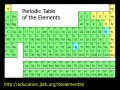
The world around us is made of atoms. Did you ever wonder where these atoms came from? How was the gold in our jewelry, the carbon in our bodies, and the iron in our cars made? In this lecture, we will trace the origin of a gold atom from the Big Bang to the present day, and beyond. You will learn how the elements were forged in the nuclear furnaces inside stars, and how, when they die, these massive stars spread the elements into space. You will learn about the origin of the building blocks of matter in the Big Bang, and we will speculate on the future of the atoms around us today.
Dr. Edward Murphy - University of Virginia, Department of Astronomy - November 13, 2012
You Already Know This Physics!
From a research path that includes a little bit of rocket science, under sea measurements, radiation detection and measurement, space experimentation and two expeditions to the Antarctic, Mr. McKisson brings a different view of how much physics most people already know from observing the world around them. With a minimal amount of math, attendees will learn a little of the history of physics and may discover that they know more than they thought about what some view as an inscrutable subject.
Mr. Jack McKisson - Jefferson Lab, Detector and Imaging Group - October 9, 2012
Living and Working in the Freezer
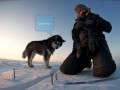
Very little data of any kind exists from the early spring in the Arctic. The reason? It's extremely cold and that makes it difficult to survive, let alone conduct science. From March through the end of April, 2011, scientists from around the world braved temperatures of -48°C in the high Canadian Arctic in the name of science. At the Catlin Arctic Survey's floating 'Ice Base' off Ellef Ringnes Island, Dr. Victoria Hill was investigating how organic material in fresh water near the surface of the ocean may be trapping heat from the sun, causing the upper ocean layers to warm. This is a very new area of research and this mechanism represents a key uncertainty in accurate modeling of ice thickness and upper ocean heat content. In this presentation Dr. Hill will talk about living and working at the ice base and discuss preliminary data from the expedition.
Dr. Victoria Hill - Old Dominion University, Bio-Optics Group - February 7, 2012
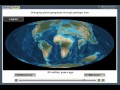
The recent earthquake may have you wondering what other surprises Virginia's geology may hold. Could there be a volcanic eruption in Virginia? Probably not today, but during the Eocene, about 35-48 million years ago, a number of mysterious eruptions occurred in western Virginia. This talk investigates the possible origins of these eruptions, and what they can tell us about the crust and mantle underneath Virginia.
Dr. Elizabeth Baedke Johnson - James Madison University - January 24, 2012
Adventures in Infectious Diseases
Dr. Susan Fisher-Hoch, Virologist and Epidemiologist, will discuss her research and travels associated with viral hemorrhagic fevers. From the Ebola outbreak in Reston, Virginia to outbreaks of Crimean Congo Hemorrhagic Fever in South Africa, Senegal, and Saudi Arabia, Dr. Fisher-Hoch has studied and tracked the pathophysiology of these viral diseases. These studies have led her from the Center for Disease Control in the United States, to Lyon, France where she was instrumental in designing, constructing, and rendering operational a laboratory capable of containing some of the world's most dangerous diseases.
Susan P. Fisher-Hoch, M.D. - The University of Texas School of Public Health - November 1, 2011
Proton Therapy - Accelerating Protons to Save Lives
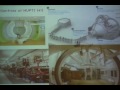
In 1946, physicist Robert Wilson first suggested that protons could be used as a form of radiation therapy in the treatment of cancer because of the sharp drop-off that occurs on the distal edge of the radiation dose. Research soon confirmed that high-energy protons were particularly suitable for treating tumors near critical structures, such as the heart and spinal column. The precision with which protons can be delivered means that more radiation can be deposited into the tumor while the surrounding healthy tissue receives substantially less or, in some cases, no radiation. Since these times, particle accelerators have continuously been used in cancer therapy and today new facilities specifically designed for proton therapy are being built in many countries. Proton therapy has been hailed as a revolutionary cancer treatment, with higher cure rates and fewer side effects than traditional X-ray photon radiation therapy. Proton therapy is the modality of choice for treating certain small tumors of the eye, head or neck. Because it exposes less of the tissue surrounding a tumor to the dosage, proton therapy lowers the risk of secondary cancers later in life - especially important for young children. To date, over 80,000 patients worldwide have been treated with protons. Currently, there are nine proton radiation therapy facilities operating in the United States, one at the Hampton University Proton Therapy Institute. An overview of the treatment technology and this new center will be presented.
Dr. Cynthia Keppel - Hampton University Proton Therapy Institute - October 25, 2011
Explore the chemistry of chocolate and how the chemistry relates to the flavor and effects of chocolate on the human body and why, even after 3,400 years of cocoa consumption, chocolate remains somewhat of a mystery.
Dr. Andy McShea - Theo Chocolate - April 19, 2011
DNA: The Strand That Connects Us All
Learn how the methods and discoveries of human population genetics are applied for personal genealogical reconstruction and anthropological testing. We will start with a short general review of human genetics and the biology behind this form of DNA testing. We will look at how DNA testing is performed and how samples are processed in our laboratory. We will also examine examples of personal genealogical results from Family Tree DNA and personal anthropological results from the Genographic Project. Finally, I will describe the newest project in our laboratory, the DNA Shoah Project.
Dr. Matt Kaplan - University of Arizona Genetics Core - March 29, 2011
The Mysterious Universe: Exploring Our World With Particle Accelerators
The universe is dark and mysterious, more so than even Einstein imagined. While modern science has established deep understanding of ordinary matter, unidentified elements ("Dark Matter" and "Dark Energy") dominate the structure of the universe, its behavior and its destiny. What are these curious elements? We are now working on answers to these and other challenging questions posed by the universe with experiments at particle accelerators on Earth. Results of this research may revolutionize our view of nature as dramatically as the advances of Einstein and other quantum pioneers one hundred years ago. Professor Brau will explain for the general audience the mysteries, introduce facilities which explore them experimentally and discuss our current understanding of the underlying science. The presentation is at an introductory level, appropriate for anyone interested in physics and astronomy.
Dr. James E. Brau - University of Oregon - November 23, 2010
Young Einstein was a rebel who seemed doomed to fail. How did he overcome rejection to become the most famous scientist in history? We will discuss and explain all his theories in plain English and without math, and we will discover how Einstein's achievements impact our lives through DVDs, GPS, iPods, computers and green energy.
Dr. Robert Piccioni - October 5, 2010
The Restoration of the USS Monitor
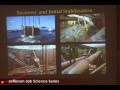
The ongoing efforts to conserve and exhibit the iconic Civil War ironclad USS Monitor at The Mariners' Museum will be discussed. The presentation will cover past conservation accomplishments by conservators and NOAA specialists, current activities in the lab, and future plans to bring back to life one of the world's most famous warships. Learn about the complex methods and procedures used to treat the ship's revolving gun turret, steam engine, Dahlgren guns and carriages, as well as numerous small artifacts like personal items from the crew.
David Krop - Conservation Project Manager, The Mariner's Museum - March 2, 2010
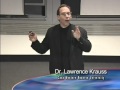
Einstein's Biggest Blunder: A Cosmic Mystery Story
Within a decade of adding a "Cosmological Constant" to his triumphant General Theory of Relativity in 1915, Einstein denigrated the addition as his "greatest blunder." In the last decade, however, new observations have led to a revolution in cosmology and a rethinking of Einstein's alleged blunder and its implications for understanding nature and life. In this World Year of Physics Lecture Series talk, Lawrence Krauss, director of the Center for Education and Research in Cosmology and Astrophysics at Case Western Reserve University, explains new data from a variety of independent cosmological and astrophysical observations and reveal the strangest theoretical possibility one can imagine.
Lawrence Krauss - Case Western Reserve University - March 16, 2005
Just in time for Thanksgiving! Do you know what toxins may be lurking in your food? How are they produced and how harmful are they? Dr. Kristen Kulp, a cancer research scientist, will perform demonstrations to illustrate methods used to detect these food toxins. She will also describe quick and easy cooking techniques that will reduce the formation of these harmful compounds.
Dr. Kristen Kulp - Lawrence Livermore National Laboratory - November 23, 2004
The Hidden World of Technology
From the moment the clock radio comes on in the morning to the time we shut off the last light at night, a hidden web of technology - a labyrinth - supports and sustains us. Our speaker takes the first half hour of his day and shows the complex web of technology underlying it. In addition to the technical aspect, he explores the social, political, economic, and cultural context of the material things that surround us.
Dr. William Hammack - University of Illinois and National Public Radio - April 20, 2004
Understanding Flight: A Physical Description of How Airplanes Fly
Did you ever wonder how a Boeing 747, weighing 910,000 lbs at takeoff can possibly get off the ground? Or, did you ever wonder how airplanes fly upside down? Why is there a "backside of the power curve?" What makes a wing efficient? These questions can be answered when lift is developed in terms of Newton's laws. A Newtonian description of lift gives an intuitive feel for how airplanes fly, without the need for complicated analysis or approximations. Through the application of Newton's three laws, we will develop the role of the angle of attack, the power curve and an understanding of wing efficiency. You will gain insight into conclusions of classical aerodynamics without the need for analysis. The next time you are on an airplane, you will understand how and why the wing is able to carry such a large load.
Dr. Scott Eberhardt - University of Washington - March 23, 2004
The Physics of Stock Car Racing from a NASCAR Champion's Perspective
A two-time NASCAR Champion will overview the physics of stock car racing from a driver's perspective. Topics will feature various technical aspects of stock car racing, such as, tires, mechanical suspension, aerodynamics and engines, with an emphasis on NASCAR-style cars.
Dr. Scott Winters - Lawrence Livermore National Laboratory - March 9, 2004
What do those huge canyons on Mars look like? What is waiting for us on the surfaces of the other planets in our solar system? What technologies are now being used to explore the depths of space? Learn about the exploration of space and see images gathered by probes and telescopes!
Nigel Hey - Science Author - February 24, 2004
From the energy supplied by the pitcher to the ball to the way the batter swings the bat to the path of the fly ball to center field, ways that physics can be applied to baseball to better understand and enjoy the game!
Dr. Robert Adair - Yale University - December 9, 2003
Strange Matters: Science Headlines from the 21st Century
Antimatter, black holes and the expansion of the universe were all 'discovered' by physicists studying squiggles on paper. Now, predictions of strange quark matter, invisible stars and new dimensions of space and time set the stage for the biggest science headlines of the 21st century.
Tom Siegfried - Science Editor, The Dallas Morning News - November 5, 2003
Multi-Million Dollar Forgeries Exposed
A million dollar French impressionist painting or a worthless fake? Explore the techniques used by scientific detectives to distinguish between priceless documents and convincing forgeries.
Dr. Michael Henchman - Brandeis University - October 7, 2003
Even superheroes must obey the laws of physics - or do they? Exactly how much force does it take to leap a tall building in a single bound and what does that tell us about Superman's home planet? Did Spider-Man accidentally cause the death of the falling Gwen Stacy when he caught her with a web? Discover what's right - and wrong - with the physics in the world of comics.
Dr. Jim Kakalios - University of Minnesota - March 25, 2003
Hidden Worlds - Hunting for Quarks in Ordinary Matter
How can scientists know anything about quarks, particles which are 100,000 times smaller than atoms? How do quarks arrange themselves to make ordinary matter? Learn about the hidden world of quarks, the particles which are inside of everything, everywhere!
Dr. Timothy Paul Smith - Dartmouth College - February 26, 2003
Dinosaur Extinctions and Giant Asteroids
The story of the Chicxulub impact crater, created 65 million years ago by the asteroid that wiped out the dinosaurs!
Dr. Kevin Pope - Geo Eco Arc Research, Aquasco, MD - November 19, 2002
Chemistry - It's More Than Puffs and Bangs!
A series of educational and entertaining demonstrations that convey the excitement of science in general and chemistry in particular.
Dr. Joe Schwarcz - McGill Office for Chemistry and Society, Montreal, Canada - October 29, 2002
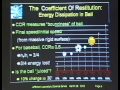
How a physicist thinks about baseball!
Dr. Alan Nathan - University of Illinois at Urbana-Champaign - March 28, 2002
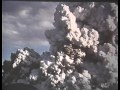
Iceland: Dynamic Land of Ice and Fire
Come and explore the geology and geography of this unique land.
Dr. Richard S. Williams Jr. - U.S. Geological Survey - February 8, 2002
The Science and Technology Behind Television
Learn how your TV works and the changes that will come with Digital High Definition TV.
Mr. Paul Cummings - Newport News Public Schools - March 6, 2001
Chemistry experiments that demonstrate the existence and properties of molecules!
Dr. H. Alan Rowe - Norfolk State University - November 14, 2000
Jefferson Lab's unique and expanding facilities are the platform for studies of contaminated soils and sediments.
Dr. Michael Kelley and Christine Conrad - College of William and Mary, Virginia Institute of Marine Science - October 17, 2000
Radiation: What is it and how can it affect me?
Learn about different types of radiation, where it comes from, how it is detected and how it affects living cells.
Robert May, Scott Schwahn - Thomas Jefferson National Accelerator Facility - March 14, 2000
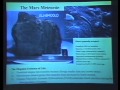
Mars Missions and the Search for Life
How engineering is used to help scientists study the geology, climate and possibility of life on Mars.
Dr. Robert Mitcheltree - NASA Langley Research Center - February 15, 2000
Eye-popping experiments demonstrating the laws of physics!
Dr. Phil Cole - University of Texas, El Paso - October 12, 1999
From spinning tops to polarized electrons, how you can become a polarized source expert in one easy lesson!
Dr. Scott Price - Thomas Jefferson National Accelerator Facility - March 9, 1999
From Star Wars to credit cards, a discussion and demonstration on the inner workings of lasers and 3-D holograms.
Mr. Paul Christie - Liti Holographics - February 9, 1999
Learn about the physics of timekeeping and atomic clocks.
Dr. Christopher Ekstrom - U.S. Naval Observatory - December 15, 1998
Fusion is a potentially limitless source of energy. Can we make it work?
Dr. Andrew Post-Zwicker - Princeton Plasma Physics Laboratory - November 3, 1998
From diapers to slime, see the many uses of these materials.
Dr. Tarek Sammakia and Dr. Gordon Yee - University of Colorado - January 13, 1998
Eye-popping experiments that you shouldn't try at home!
Professor Cynthia Keppel with Mr. R. Neil Green and Mr. Tege Margues - Hampton University - November 18, 1997
Predict the outcome of physics experiments and brain teasers!
Professor Richard Berg - University of Maryland - October 15, 1997
Symmetry - From Kaleidoscopes to Theories of Everything and Nothing
How the idea of symmetry helps us understand the world.
Dr. Howard Georgi - Harvard University - April 29, 1997
Detecting Einstein's Gravity Waves
LIGO - A project to build observatories for a new window on the universe.
Dr. David Shoemaker - Massachusetts Institute of Technology - March 18, 1997
Interactive Computer Games and Animation
Insights on creating and playing interactive games.
Ms. Stephanie Barish - Shoah Foundation - December 10, 1996
Mechanical Properties of Soda Cans
How heat and chemical treatments make aluminum alloys so useful and versatile.
Dr. Carolyn Meyers - North Carolina A&T State University - October 23, 1996
Repairing the Hubble Space Telescope and experimenting in space.
Dr. Kathryn C. Thornton - Astronaut, NASA Johnson Space Center - April 17, 1996
Understanding prehistoric archaeology and sea level change.
Dennis Blanton - The College of William and Mary - January 23, 1996
Interpreting Data from Particle Detectors
How we learn about subatomic particles and their interactions.
Dr. Gail Dodge - Old Dominion University - November 14, 1995
Information storage and transmission in the brain.
Dr. Charles F. Stevens - Salk Institute - October 17, 1995
Exploring the Microwave Universe
Invisible microwaves from space provide clues for astrophysicists.
Dr. Jacqueline N. Hewitt - Massachusetts Institute of Technology - September 26, 1995
Answers to questions about AIDS: How, Why and How Not
Dr. Saundra H. Oyewole - Trinity College - April 4, 1995
Making hundreds of computers do your bidding - even from home!
Dr. Chip Watson - CEBAF - March 14, 1995
Waste: You Can't Just Throw It Away
Cleaning up hazardous waste provides new challenges for today's scientists.
Jacqueline W. Sales - Hazardous and Medical Waste Services, Inc. - February 14, 1995
Earth on Fire: The Environmental Impact of Global Burning
How human actions and activities affect the atmosphere.
Dr. Joel Levine - NASA Langely Research Center - January 11, 1995
Techniques for reducing the sonic boom of supersonic aircraft.
Dr. Christine Darden - NASA Langely Research Center - December 13, 1994
Collisions of Comets and Asteroids with Earth
How much of a threat do these collisions pose today?
Dr. Christopher Chyba - National Security Council - November 9, 1994
Becoming Enlightened About Light
How the use of light, especially laser light, entertains, heals, and helps us understand our world.
Dr. Michelle Shinn - Bryn Mawr College - October 27, 1994
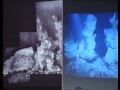
Exploring Submarine Volcanoes - A New Frontier
Undersea voyages capture geology in action at mid-ocean ridges.
Dr. John Delaney - University of Washington - May 25, 1994
The World in a Glass of Soda Pop
Dramatic and surprising demonstrations of physics with everyday objects.
Dr. Charles Hyde-Wright - Old Dominion University - April 19, 1994

Oysters: A Chesapeake Controversy
The science behind oyster breeding, cultivation and fishery management.
Dr. Mary C. Gibbons - McMullen Associates - February 15, 1994
Pollution Sleuthing Using an Accelerator
Understanding air pollution using nuclear and atomic detective techniques.
Dr. Thomas A. Cahill - University of California - January 11, 1994
Cloning: The Science Behind Jurassic Park
Learn the latest on genetics being discovered by the Human Genome Project.
Dr. Paula Gregory - University of Michigan - December 7, 1993
Finding Subatomic Particles at CEBAF
How physicists detect particles that can't be seen.
Dr. Keith Baker - Hampton University and CEBAF - November 16, 1993
Neutrinos: Much Ado About (Almost) Nothing
Learn about nature's most elusive and nearly undectable particle.
Dr. Gina Rameika - Fermilab - September 28, 1993
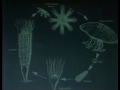
Explore the world of jellyfish research with a marine scientist and learn about jellyfish, their sting, and their predators.
Dr. Karen Rowe - Hampton University - April 20, 1993
Avoiding Environmental Problems
Are you worried about our planet's future? Environmental scientists do something about it.
Dr. Elizabeth Anderson - Clements International Corporation - December 2, 1992
Do You Remember When? 100,000 Years Ago on the Peninsula
How do we know about the Peninsula's prehistoric past? Learn how fossils give us a local history lesson.
Geology Professor Jerre Johnson - College of William and Mary - October 21, 1992
Microscopes and Telescopes - How Does the World Work?
How do we learn about atoms and the universe?
Dr. Leon Lederman - Nobel Laureate - September 30, 1992
Physical Fitness for Athletes . . . and Everyone Else, Too
What constitutes physical fitness? How does the body keep in shape? Athletes especially will be interested in this overview by a sports medicine expert.
Dr. David N. Tornberg - Hampton Roads Orthopedic Associates - May 14, 1992
From Acne to Suntans: Dermatology for the Teenager
How does human skin do its job of protecting the body? What sorts of things can go wrong -- and what can be done when they do?
Dr. Susan E. Mackel, M.D. - Oyster Point Dermatology, Inc. - February 20, 1992
Magnets and Their Attractions for Technology
How do scientists and engineers use magnets? What do magnets promise for the future? See for yourself what's involved in tapping one of nature's fundamental forces: electromagnetism.
Dr. Leigh Harwood - CEBAF - December 11, 1991
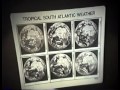
Investigating Earth's Atmosphere
Demonstrations of weather forecasting tools and techniques for experiments in the atmosphere and of lasers used to measure atmospheric trace gases and aerosols.
Mark Shipham, Scott Bachmeier, Scott Higdon, and Byron Meadows - NASA/Langley Research Center - May 14, 1991
Explore the World of Scientific Computing LIVE!
Simulations and demonstrations of the human interface for real-time data acquisition, the capabilities and possibilities of computers and networking, and theoretical modeling of the physical universe.
Dr. Roy Whitney, Ms. Rita Chambers and Dr. Chip Watson - CEBAF - March 6, 1991
Is Something Wrong With the Weatherman?
What makes weather forecasting so hard? How can computers help?
Dr. Mike Kaplan - North Carolina State University - January 22, 1991
What IS superconductivity, anyway? In sub-Antartic cold, strange things happen to the superconductor BArium Yttrium Copper Oxide.
Dr. Randy Caton and Dr. Fred Hartline - Christopher Newport University - December 12, 1990
The hows and whys of our disappearing beaches - severe storms, changing of the sea level, and shifting sand.
Dr. Suzette Kimball - VIMS Associate Marine Scientist - October 25, 1990
An overview of CEBAF's purpose and technology.
Dr. Beverly Hartline and Kathryn Strozak - CEBAF - September 27, 1990
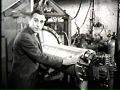
In his youth, Dr. William Bertozzi, an MIT professor who has long been a leader in experimental nuclear physics using beams of electrons, carried out an experiment in which he explored the relationship between the velocity of electrons and their kinetic energy by measurements over a range of accelerating voltages between 0.5 MeV and 15 MeV. The kinetic energy is measured using calorimetry and the velocity is measured by time-of-flight. This educational film, made in 1962, documents the experiment and shows that the electrons have a limiting speed equal to that of light, in agreement with Einstein's theory of relativity.
Dr. William Bertozzi - Massachusetts Institute of Technology - Sometime in 1962
Citation and linking information
For questions about this page, please contact Carol McKisson.